
Tooth pain has a real habit of showing up at exactly the worst possible moment. Sometimes it’s a dull ache that comes and goes without much warning. Other times, it’s sharp enough that even a glass of water feels like a genuine ordeal. Plenty of people try to just ignore it, hoping it’ll disappear on its own eventually. Unfortunately, it rarely actually works that way. That’s why seeking Tooth pain treatment in Davangere at the right time can make a genuine difference to both your oral health and everyday comfort.
At Happy Smiles Dental Care, experienced dentists like Dr. Sudhir K.M and Dr. Chaitra N.T believe finding the actual root cause is the first real step toward lasting relief, rather than just masking the pain temporarily.
Why Tooth Pain Treatment in Davangere Starts With Finding The Real Cause
Not every toothache shares the same reason behind it.
Two people can experience genuinely similar pain, yet the underlying problem could be completely different from one to the other. That’s why dentists never lean on symptoms alone. A proper examination is what actually identifies what’s happening, before any treatment gets recommended.
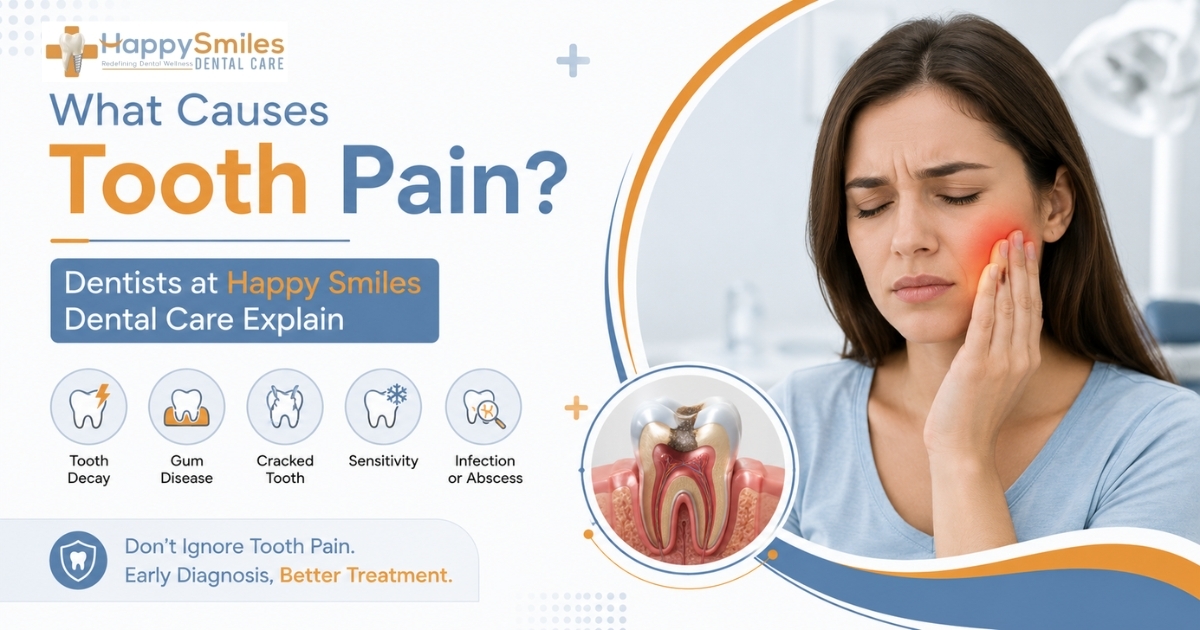
Some of the most common causes of tooth pain include:
- Tooth decay
- Deep cavities
- Gum infections
- Cracked or broken teeth
- Worn enamel
- Dental abscesses
Each condition affects the tooth differently, which is really why treatment ends up varying quite a bit from patient to patient.
Tooth Decay Is Still The Biggest Culprit
One of the most frequent reasons behind tooth pain remains untreated decay. It usually starts small – a tiny cavity might not cause much discomfort at first, which is part of why so many people end up ignoring it. Over time, bacteria keep moving deeper into the tooth, until they reach the more sensitive inner layers.
That’s when the pain genuinely gets hard to ignore. You might notice sensitivity while eating sweets, discomfort with hot or cold drinks, or pain while chewing normally. Left untreated, the infection can spread further and eventually call for more extensive procedures like root canal treatment or extraction. Catching it early almost always makes treatment a lot simpler down the line.
Don't Ignore Gum Problems
People often assume tooth pain always starts inside the tooth itself. That’s not necessarily true at all. Sometimes the surrounding gums are actually responsible. Swollen gums and tooth pain often show up together, since inflammation places pressure around the roots of the teeth. Gum disease, plaque build-up, food trapped between teeth, or bacterial infections can all trigger this kind of discomfort.
You might also notice bleeding while brushing, bad breath that won’t shift, redness, or tenderness around the gums. These signs really shouldn’t get brushed aside, even if the pain itself feels manageable for now. Healthy gums play just as big a role as healthy teeth when it comes to maintaining good oral health overall.
Wisdom Teeth Can Create Unexpected Problems
Plenty of adults experience discomfort once their wisdom teeth start coming through. Sometimes they grow in normally without causing any real issues. In other cases, there simply isn’t enough room inside the mouth to accommodate them. This often leads to Wisdom tooth pain, swelling, difficulty chewing, jaw stiffness, or repeated infections around the tooth that’s only partially erupted.
The discomfort can come and go over several weeks, which sometimes leads people to assume the problem’s resolved itself. In reality, the tooth may still be creating pressure beneath the gums the whole time. A proper dental examination is what actually determines whether the wisdom tooth just needs monitoring, or whether treatment’s genuinely the better path forward.
Why Waiting Usually Makes Things Worse
One of the bigger mistakes people make is leaning on painkillers for weeks without ever understanding what’s actually causing the discomfort. Pain relief tablets might ease symptoms temporarily, but they don’t remove infections, repair cavities, or treat damaged teeth in any real sense.
Delay it, though, and the underlying problem tends to grow worse – which usually means procedures a lot more involved than what would’ve handled it early on. That’s really why dentists push patients to seek professional advice the moment persistent tooth pain shows up, rather than sitting on it.
Final Thoughts
“Wait it out” was never really the right approach to tooth pain. Mild or severe, discomfort like this is usually the teeth or gums flagging that they need attention – the sooner, the better. Get Tooth pain treatment in Davangere sorted early, and dentists can pin down the actual cause and recommend treatment before things spiral into something more complicated. Cavities, gum disease, wisdom teeth acting up – whatever the source, catching it early tends to lead somewhere better.
At Happy Smiles Dental Care, Dr. Sudhir K.M and Dr. Chaitra N.T build their care around actually addressing what’s causing the pain, not just quieting it – helping patients get both their oral health and everyday comfort back on track.
FAQs
1. When should I see a dentist for tooth pain?
Pain that’s stuck around more than a day or two, gotten genuinely bad, or shown up alongside swelling, fever, or trouble chewing – that’s your cue to get seen, not wait it out further. Put it off, and the problem underneath tends to get worse, usually meaning a more involved procedure and a longer road back once you finally do see someone.
2. What are the most common causes of tooth pain?
Decay, cavities, cracked teeth, gum infections, worn enamel, abscesses, grinding – that’s the usual list. A proper examination is really the only way to pin down which one’s actually behind the pain, so the right treatment gets recommended before things quietly get worse.
3. Can wisdom teeth always cause pain?
Not necessarily. Plenty come through without a hitch. Others get impacted simply because the jaw doesn’t have room for them. Regular check-ups track how they’re developing and flag trouble before it starts affecting the teeth nearby or turns into repeated infections.
4. Can Swollen gums and tooth pain happen at the same time?
They can, and often do. Swollen gums and tooth pain tend to show up together because inflammation in the gums affects the tissue right around the teeth. Plaque, gum disease, food that’s gotten trapped, bacterial infection – any of these can set it off. Catching it early cuts down the inflammation and heads off bigger complications later.
5. How do I choose the right Dentist for tooth pain in Davangere?
Look for someone with real experience who actually digs into what’s causing the pain, rather than just treating whatever symptom’s loudest – that’s the short version of finding the right Dentist for tooth pain in Davangere. A dentist who identifies the root issue gives your natural teeth a better shot at survival, and sets up better oral health for years down the line.