
You sat through the numbness and the drilling. The tooth settled. Then, a year or two later, the dull ache is back, or a small bump has appeared on the gum beside it.
It’s a frustrating moment. Wasn’t the root canal supposed to fix this? Usually it does. A small share of treated teeth run into trouble again, though, and knowing why makes your next decision far easier. This guide is for anyone considering root canal treatment in Davangere, whether it’s a first procedure or a repeat.
What a Root Canal Fixes, and What It Doesn't
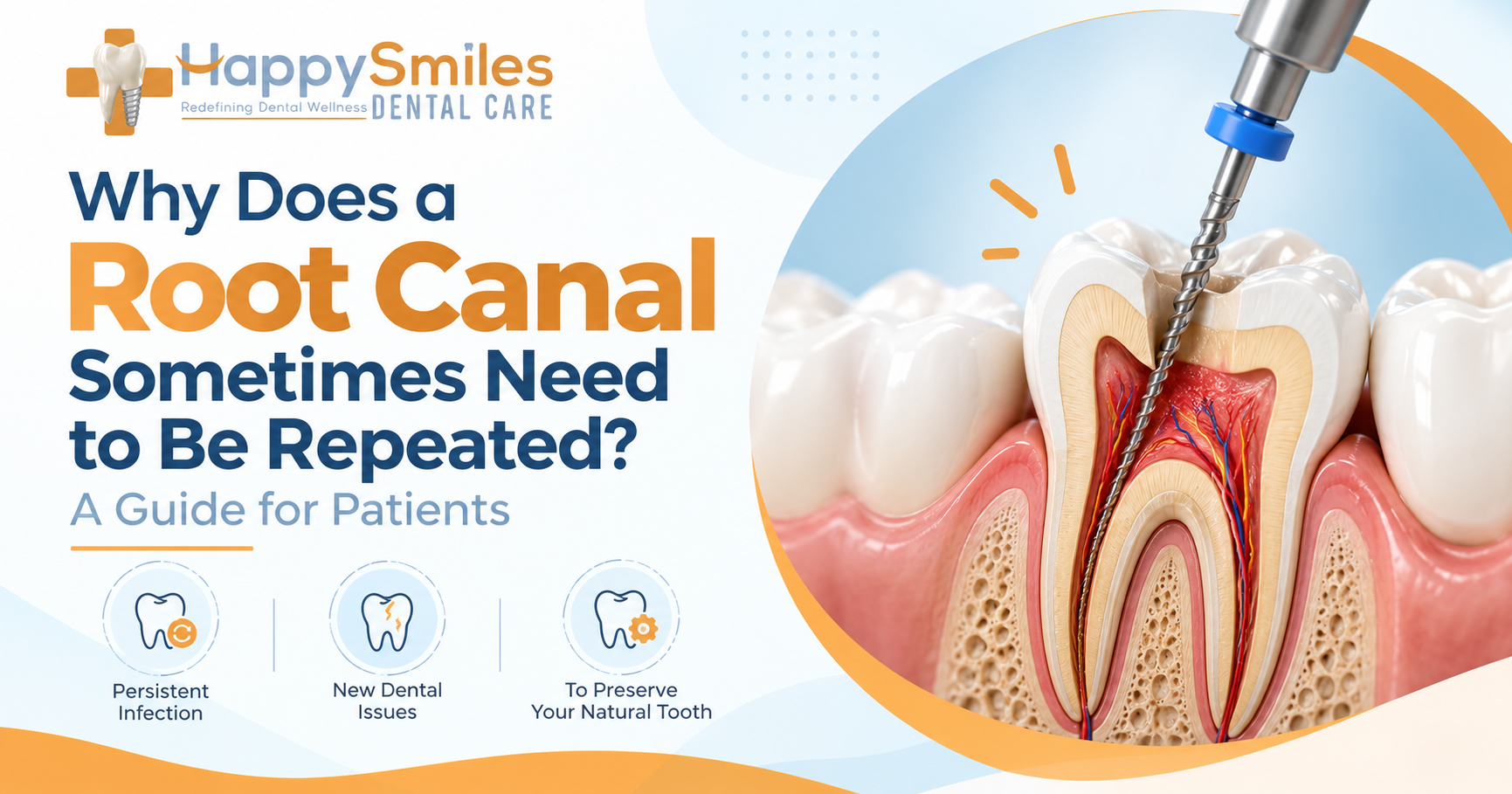
During a root canal, the dentist removes infected or inflamed pulp, cleans the narrow canals inside each root, then fills and seals them. The aim is simple: clear out the bacteria and keep them out.
But no procedure makes a tooth bulletproof. Any root canal treatment in Davangere or elsewhere removes an existing infection, while the tooth itself still faces sugar, heavy biting forces and fresh decay for the rest of its life.
Root Canal Retreatment: How Bacteria Find a Way Back
Root canal retreatment means reopening the tooth, removing the old filling material, cleaning the canals again and resealing them. It’s needed when infection returns, usually because of:
- A missed canal. Upper molars commonly hide an extra, very fine canal. Left untreated, it becomes a home for bacteria.
- Surviving bacteria. Some species, such as Enterococcus faecalis, tolerate the disinfectants used inside the tooth.
- A delayed crown. Temporary fillings are short-term seals. Leave one too long and saliva seeps into the canals.
- New decay or a broken restoration. A cracked crown or fresh cavity reopens the door.
- A cracked root. This one is harder, because a vertical root fracture usually can’t be sealed by retreatment alone.
Second Time Round: Choosing Root Canal Treatment in Davangere
Once the cause is clear, there are three realistic routes.
Non-surgical root canal retreatment suits most teeth. A systematic review found success rates ranging from about 70% to over 90%, depending largely on why the original treatment broke down.
If a post or crown can’t be removed safely, an apicoectomy is the next option. The dentist reaches the root tip through the gum, removes the infected end and seals it directly. And when the root is cracked or too little tooth remains, extraction followed by a dental implant or bridge is the sensible choice.
Looking for a root canal specialist in Davangere? Ask one question first: how will you find out why the original treatment didn’t hold? An answer based on X-rays and examination beats any promise of a quick fix.
Happy Smiles in Vidyanagar handles endodontic retreatment, apicoectomy and cracked teeth within its endodontics department, so all three routes are discussed under one roof. Dr. Sudhir K.M (MDS, PDCR) and the team start with diagnosis and talk you through each option.
Protecting the Tooth After Round Two
- Have the permanent crown placed on schedule, not months later.
- Don’t chew hard food on a temporary filling.
- Brush twice a day and clean between your teeth.
- Keep up regular check-ups so problems show on X-rays before they hurt.
Don't Write Off That Tooth Yet
A root canal that flares up again is a setback, not a verdict. The sooner it’s checked, the more options stay open.
If an old treated tooth is bothering you, book an assessment for root canal treatment in Davangere with Happy Smiles. Call +91 7204723987 or +91 9480858278, or book your appointment online.
Frequently Asked Questions
Is a repeat root canal more painful than the first?
Not usually. The tooth is numbed with local anaesthetic before any work starts, so the procedure itself should feel much like the first one. Mild tenderness for a few days afterwards is normal and tends to settle on its own.
How long does it take to redo a root canal?
It depends on how complex the tooth is. Removing old filling material and locating missed canals takes longer than a first treatment, so many cases need two visits. Your dentist will give a clearer estimate after examining the X-rays.
Can a tooth be retreated more than once?
Sometimes, but each round removes a little more tooth structure. If a second attempt has already failed, surgery at the root tip or extraction with a replacement is often the more reliable route. Your dentist should weigh this honestly with you.
Why does my root canal tooth hurt years later?
Why does my root canal tooth hurt years later?
Pain years later usually points to new infection, often from fresh decay, a leaking or broken crown, or a canal that wasn’t treated originally. A cracked root is another possibility. An X-ray and examination will show which one applies.
Do I need a new crown after the tooth is retreated?
Usually, yes, particularly for molars and premolars. The old crown is typically removed to reach the canals, and a fresh, well-fitted one protects the brittle tooth from fracture while sealing out bacteria. Placing it promptly matters, as delays invite reinfection.