
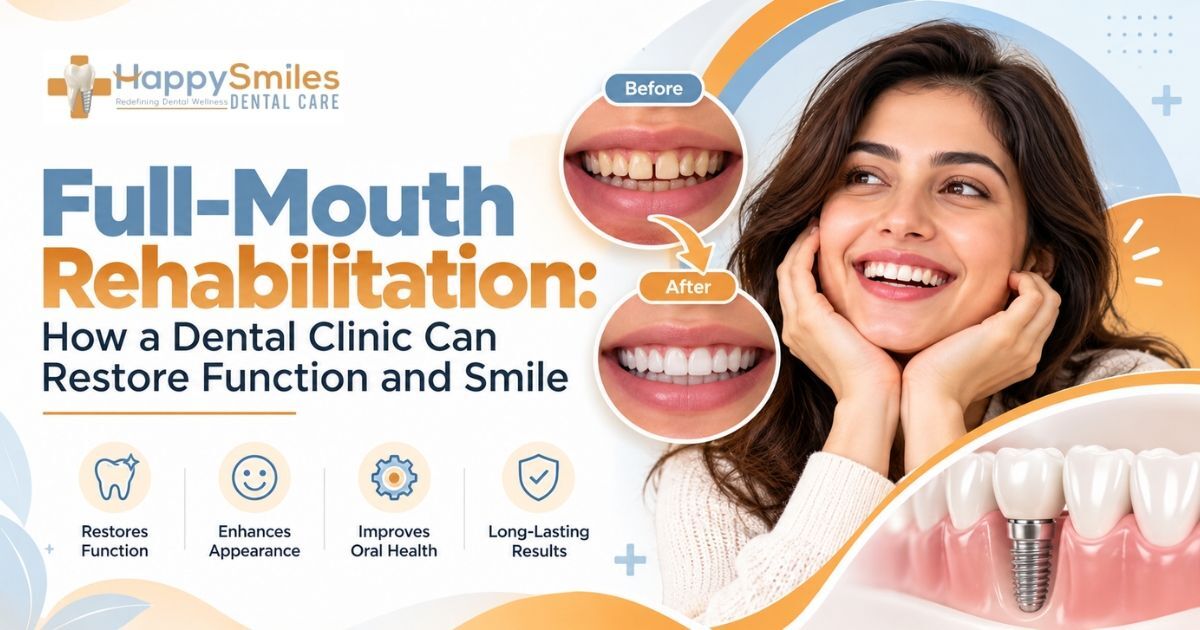
When several teeth are worn, cracked or missing and your bite feels wrong, fixing one tooth at a time rarely solves the real problem. Full mouth rehabilitation treats the whole mouth as one working system and rebuilds it with a single, joined-up plan.
What Full Mouth Rehabilitation Really Means
Full mouth rehabilitation is a planned series of treatments that restores the teeth, gums and bite across both jaws. It isn’t one procedure. Depending on your needs, it can combine crowns, bridges, implants, root canal treatment, gum care and sometimes orthodontics.
Looks matter, but function comes first. A beautiful set of crowns on an unstable bite won’t last.
Bite planning is the heart of good treatment. A 2024 review in Clinical, Cosmetic and Investigational Dentistry advises dentists to test a new bite height with temporary restorations before fitting the final teeth.
Warning Signs Your Mouth Needs More Than a Quick Fix
Most patients arrive with one complaint that turns out to be part of a wider pattern. Look out for:
- Teeth worn short or flat from grinding or acid erosion
- Several broken, decayed or heavily filled teeth
- Missing teeth that force you to chew on one side
- Jaw pain, morning headaches or clicking near the ears
- Old crowns or bridges failing one after another
Gum health matters just as much. The World Health Organization’s 2022 Global Oral Health Status Report estimates that severe gum disease affects around one billion people worldwide and is a major cause of total tooth loss. Left untreated, it undermines any restoration built on top.
The Rebuild, One Stage at a Time
A careful full mouth dental restoration follows a clear order. Skipping to cosmetic work before the foundations are sound is a common reason results fail.
- Assessment: examination, X-rays, bite records and a talk about your goals.
- Foundation: decay, infection and gum disease are treated first, and root canal treatment saves teeth worth keeping.
- Trial bite: temporary teeth let you test the new bite and shape before anything is final.
- Final restorations: crowns, bridges, implants or dentures are fitted.
- Upkeep: regular reviews, plus a night guard if you grind.
Where Implants Make the Difference
For one or two gaps, a bridge or single dental implant can be enough. People who have lost most of their teeth face a bigger choice, and full mouth dental implants in Davangere give them a fixed option that doesn’t slip like a loose denture.
Implants aren’t right for everyone, though. Bone levels and gum health decide whether they’re suitable, or whether a bridge or denture is the better choice.
Function First, and Then the Smile You Want
This isn’t purely cosmetic work, but the cosmetic payoff is real. Once your bite is stable, the shape, shade and length of each tooth can be designed to suit your face. That’s where rehabilitation overlaps with smile restoration treatment. The difference is that your new smile sits on a healthy base instead of hiding problems.
Your First Step Towards a Stronger Bite
Full mouth rehabilitation is a commitment, so the first consultation matters. Happy Smiles is a dental clinic in Davangere that brings prosthodontic, implant, root canal, gum and orthodontic care under one roof. Dr. Sudhir K.M and the team explain every option and stage before treatment begins.
If eating, speaking or smiling has started to feel like hard work, book a consultation at Happy Smiles and find out exactly what your mouth needs.
FAQs
How long does full mouth rehabilitation take?
It depends on how much work your mouth needs. Cases without implants can finish within a few months. When implants are involved, healing time adds several more months. Your dentist will give you a clear timeline after the first assessment.
Is full mouth rehabilitation painful?
Most steps are done under local anaesthetic, so you shouldn’t feel pain during treatment. Some soreness after surgery or tooth preparation is normal and settles within a few days. Your dentist will explain aftercare and pain relief at every stage.
Can I get implants if I've worn dentures for years?
In many cases, yes. Long-term denture wear can shrink the jawbone, so your dentist will check bone levels first. Where bone is thin, grafting or a different implant plan can still make fixed teeth a realistic option for you.
How long will the results last?
With good home care and regular check-ups, crowns, bridges and implants last for many years. Grinding, smoking and skipped hygiene visits shorten that lifespan. If you grind at night, wearing a night guard protects your new teeth from damage.
How do I know if I need a full rebuild or just a few fillings?
A thorough examination is the only reliable way to tell. If problems affect many teeth, your bite or your jaw, a whole-mouth plan works better than piecemeal repairs. Book a consultation at Happy Smiles for an honest, clear assessment.