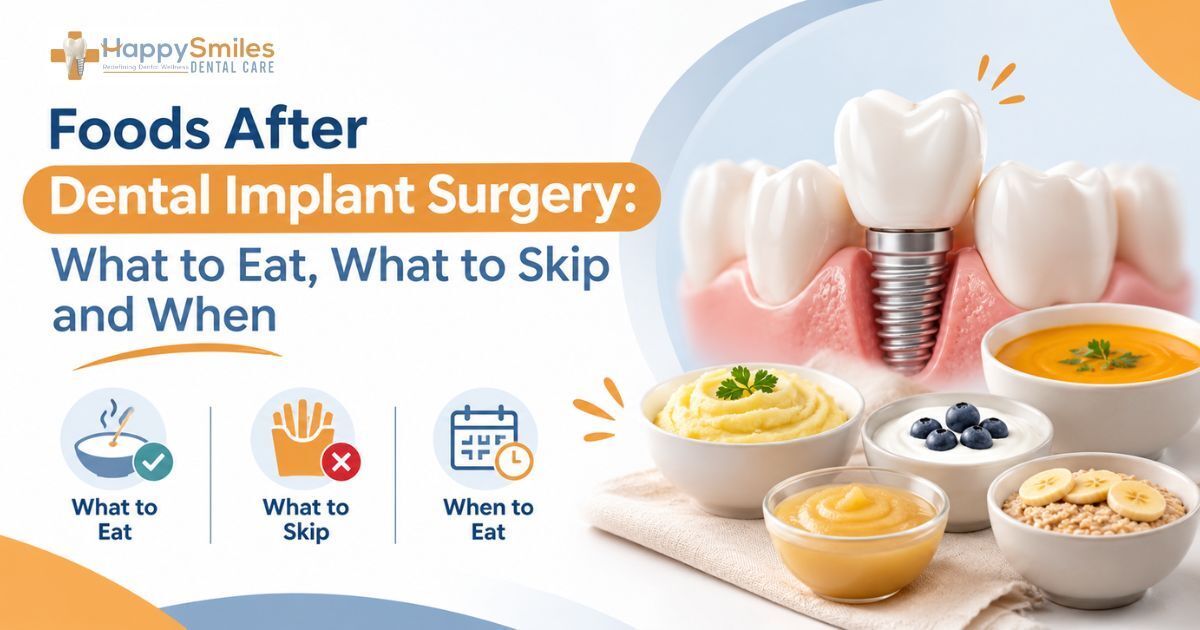
Your implant is in. Now comes the part few people plan for: the kitchen. Picking the right foods after dental implant surgery shapes how comfortable the next few weeks feel, and it protects the bone forming around your new post.
Worried about going hungry? You won’t. The menu gets softer, not smaller, and it widens as you heal.
The Healing Clock Your Gums Don't Show You
A dental implant is a small titanium post placed in the jawbone. The bone then grows around it and holds it firmly in place. According to the Cleveland Clinic, the first round of healing takes about a week, but the jawbone can take three to nine months to fully fuse with the implant.
Your gums can feel fine long before the bone has finished its work. A hard bite in that window strains a post that isn’t secure yet. So your choice of foods after dental implant surgery matters well after the soreness fades.
The First Week: Cool, Smooth and Spoon-Friendly
For the first few days, stick to soft foods after dental implants that need little or no chewing. Good options include:
- Plain curd or yoghurt
- Ragi malt or thin porridge, served lukewarm
- Smooth dal or vegetable soup
- Mashed potato or well-cooked khichdi
- Banana or mango smoothies, eaten with a spoon
Keep everything lukewarm. Very hot food and drinks irritate the wound in the first day or two. And skip the straw completely, because the suction can disturb the blood clot protecting the site.
Weeks Two to Six: Widening Your Dental Implant Recovery Diet
Once the tenderness eases, your dental implant recovery diet can include more texture. Soft idli, rice with rasam, pasta, steamed fish and chapati softened in curry all work well. Chew on the side away from the implant.
Protein and Vitamin C Do the Quiet Work
Protein helps your body repair tissue, and vitamin C supports the collagen your gums rely on. That makes them two of the most useful foods for implant healing. Paneer, eggs, dal and fish cover protein. Papaya, ripe mango and blended guava give you vitamin C without hard chewing.
Foods After Dental Implant Surgery That Can Set You Back
The list of foods to avoid after implants is shorter than most people expect:
- Hard and crunchy snacks: nuts, chakli, murukku and popcorn
- Sticky sweets: chikki, toffee and chewing gum
- Spicy dishes and pickles: these irritate the wound
- Whole fruit bitten with front teeth: cut apples into thin slices instead
- Alcohol and smoking: both slow healing, and smoking raises the risk of implant problems
Easing Back Into Everyday Meals
There is no single date when a post-implant surgery diet ends. It depends on how many implants you had, whether you needed a bone graft, and how quickly your body heals. Your dentist checks the site at each review and tells you when firmer foods are safe.
When you get the go-ahead, bring crunchy foods back one at a time. If you aren’t sure whether a food is ready for your implant, ask Dr Sudhir K.M at your follow-up visit rather than testing it yourself.
Your Next Bite, Planned Properly
Careful choices about foods after dental implant surgery cost you a few weeks of variety. In return, you get an implant that sits firmly for years.
If you have questions about implant treatment or recovery, the team at Happy Smiles in Davangere can talk you through what to expect. Book a visit for advice that fits your mouth, not a generic list.
Frequently Asked Questions
How long should I eat only soft food after a dental implant?
Most patients stay on soft foods after dental implants for the first week or two, then add texture gradually. Your exact timeline depends on the number of implants and any bone grafting. Your dentist confirms when firmer food is safe.
Can I drink tea or coffee after implant surgery?
Avoid hot drinks for the first 24 hours, as heat irritates the fresh wound. After that, lukewarm tea or coffee is fine for most patients. Sip it directly from the cup rather than through a straw, and limit sugar.
Is curd safe to eat after a dental implant?
Yes. Plain curd is one of the best foods for implant healing in the first few days. It is cool, soft and rich in protein. Choose it plain rather than sweetened, and eat it chilled or at room temperature.
When can I eat chapati and rice normally again?
Soft rice and well-soaked chapati usually suit week two onwards, eaten on the opposite side. Dry or crisp rotis should wait longer. Your follow-up appointment is the right time to ask about returning to regular textures.
What happens if I chew hard food too early?
Biting hard on a healing implant puts pressure on bone that hasn’t fully fused yet. This causes pain and, in some cases, stops the implant from settling properly. If you feel sudden discomfort after chewing, contact your dentist promptly.