
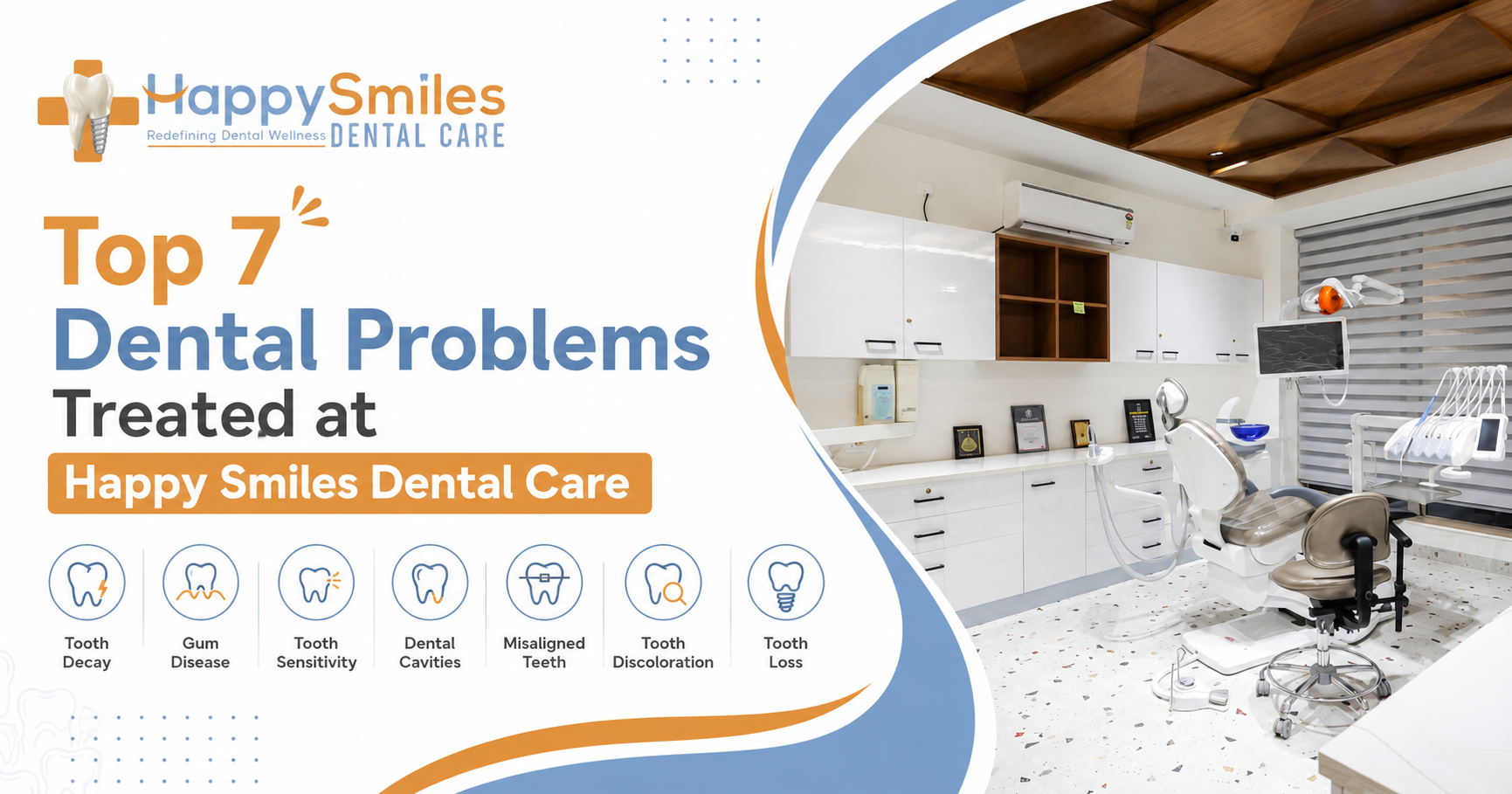
Dental problems can start quietly. A little sensitivity while drinking something cold may not seem important. Neither does occasional bleeding while brushing. Yet small symptoms can sometimes point towards problems that become harder to manage when ignored.
Understanding the common dental problems that Davangere patients experience can help you recognise when it is time to see a dentist. At Happy Smiles Dental Care, treatment covers preventive, restorative, cosmetic and specialised dental care for patients of different ages.
1. Tooth Decay and Cavities
Tooth decay is one of the most common reasons people visit a dentist. It develops when bacteria and acids gradually damage the tooth surface. Early decay may cause no noticeable symptoms. Later, you might experience sensitivity, discomfort or visible changes in the tooth.
Tooth decay treatment depends on how far the damage has progressed. A small cavity may need a filling, while deeper decay can require root canal treatment. Regular check-ups can help identify decay before it becomes more complicated.
2. Tooth Pain and Sensitivity
Tooth pain can range from a mild ache to sharp, persistent discomfort. It may happen when you eat, drink, bite down or touch a particular tooth. There can be several reasons behind it, including decay, infection, cracked teeth, gum problems or sensitivity.
If pain continues, don’t simply rely on painkillers. Proper tooth pain treatment that Davangere patients need starts with finding the underlying cause. Happy Smiles provides endodontic care, including root canal therapy and treatment for cracked or traumatised teeth.
3. Gum Disease
Healthy teeth need healthy gums too.
Redness, swelling, bleeding while brushing, persistent bad breath or tender gums can indicate gum problems. Early gum disease may be manageable with professional cleaning and better home care. More advanced disease requires proper dental assessment and treatment.
Among the dental issues in Davangere, gum-related concerns deserve attention because untreated gum disease can affect the tissues supporting the teeth.
Happy Smiles offers periodontic care focused on treating gum infections and supporting the tissues around the teeth.
4. Misaligned or Crowded Teeth
Crooked, crowded or widely spaced teeth aren’t only about appearance. They can sometimes make brushing and flossing more difficult and may affect your bite.
Orthodontic treatment can gradually move teeth into better positions. Happy Smiles offers traditional metal braces, ceramic braces, Invisalign clear aligners and other orthodontic solutions.
If you’re dealing with oral health problems in Davangere related to alignment, an orthodontic assessment can help determine which option is appropriate for your teeth and bite.
5. Missing Teeth
Losing a tooth can affect more than your smile. Depending on its location, it may make eating or speaking less comfortable and can affect the way surrounding teeth function.
Dental implants are one option for replacing missing teeth. They use an artificial tooth root to support a replacement tooth and can restore function and appearance.
Happy Smiles provides implant dentistry as part of its restorative services, with treatment planned according to the patient’s individual needs.
6. Cracked or Damaged Teeth
Teeth can become damaged because of injuries, biting hard objects, grinding or existing weakness. Sometimes a crack is obvious. In other cases, discomfort when biting may be the only clue.
Cracked teeth should not be ignored because further damage can occur. Happy Smiles’ endodontic department includes management of cracked teeth and traumatic dental injuries.
Early assessment can help the dentist understand whether the tooth can be preserved and what treatment may be appropriate.
7. Stained or Discoloured Teeth
Not every dental concern involves pain.
Tea, coffee, smoking, certain foods and natural ageing can gradually change tooth colour. If you feel uncomfortable about stains, professional cosmetic treatment may help.
Happy Smiles offers cosmetic dentistry and laser tooth whitening. The appropriate option depends on the type of staining and the condition of your teeth.
Professional assessment is important because whitening isn’t suitable for every type of discolouration.
When Should You See a Dentist?
Some common dental problems are easy to spot, while others develop without obvious symptoms.
Book a dental appointment if you notice persistent pain, sensitivity, bleeding gums, swelling, bad breath, a cracked tooth or changes in tooth colour. Even if everything feels fine, regular check-ups and professional cleaning can help prevent problems from becoming more serious.
Preventive care is a major part of Happy Smiles’ approach, with regular examinations, professional cleaning and patient education designed to support long-term oral health.
Why Early Treatment Matters
Putting off dental treatment can make a manageable problem more complicated.
A small cavity may become deeper. Gum inflammation can progress. A damaged tooth may fracture further. Persistent pain may indicate an infection that needs professional attention.
The aim isn’t to treat every minor change with a major procedure. It is to identify the problem accurately and choose treatment based on what your teeth actually need.
Happy Smiles focuses on personalised treatment planning, modern technology and comprehensive dental care under one roof.
Conclusion
From cavities and gum disease to tooth pain, missing teeth, alignment problems and cosmetic concerns, the common dental problems that Davangere patients experience can vary considerably. The important thing is not to ignore persistent symptoms or wait until discomfort becomes severe. Regular examinations can help identify problems earlier and support better long-term oral health. Dr Sudhir K.M at Happy Smiles Dental Care provides general, restorative, cosmetic, orthodontic, endodontic, periodontal and implant dentistry, with personalised care for patients of different ages.
FAQs
1. What are the most common dental problems treated in Davangere?
The common dental problems that Davangere patients may seek treatment for include tooth decay, cavities, gum disease, tooth pain, cracked teeth, missing teeth, misalignment and tooth discolouration. The appropriate treatment depends on the cause and severity, so a dental examination is important before deciding what care is required.
2. When should I seek tooth pain treatment in Davangere?
You should consider tooth pain treatment in Davangere if discomfort is persistent, severe, returns regularly or occurs alongside swelling, sensitivity or difficulty chewing. Tooth pain can have different causes, including decay, infection or cracks. Treating the symptom without identifying the cause may allow an underlying dental problem to worsen.
3. What happens during tooth decay treatment?
Tooth decay treatment depends on how much of the tooth has been affected. Early damage may be managed with preventive care, while a cavity may require a filling. If decay reaches the inner part of the tooth, root canal treatment may be needed to address infection and preserve the natural tooth.
4. Are cavity treatment options different for every patient?
Yes. Cavity treatment depends on the size and location of the decay, the condition of the tooth and whether the inner dental tissues are affected. A dentist may recommend a filling for a smaller cavity or more extensive treatment when decay has progressed significantly. Early diagnosis generally gives more treatment options.
5. How can I prevent common teeth problems?
Preventing common teeth problems starts with brushing twice daily, cleaning between your teeth, limiting frequent sugary foods and drinks, and attending regular dental check-ups. Professional cleaning can also help maintain oral hygiene. If you notice pain, bleeding, swelling or sensitivity, arrange an examination rather than waiting for it to disappear.