
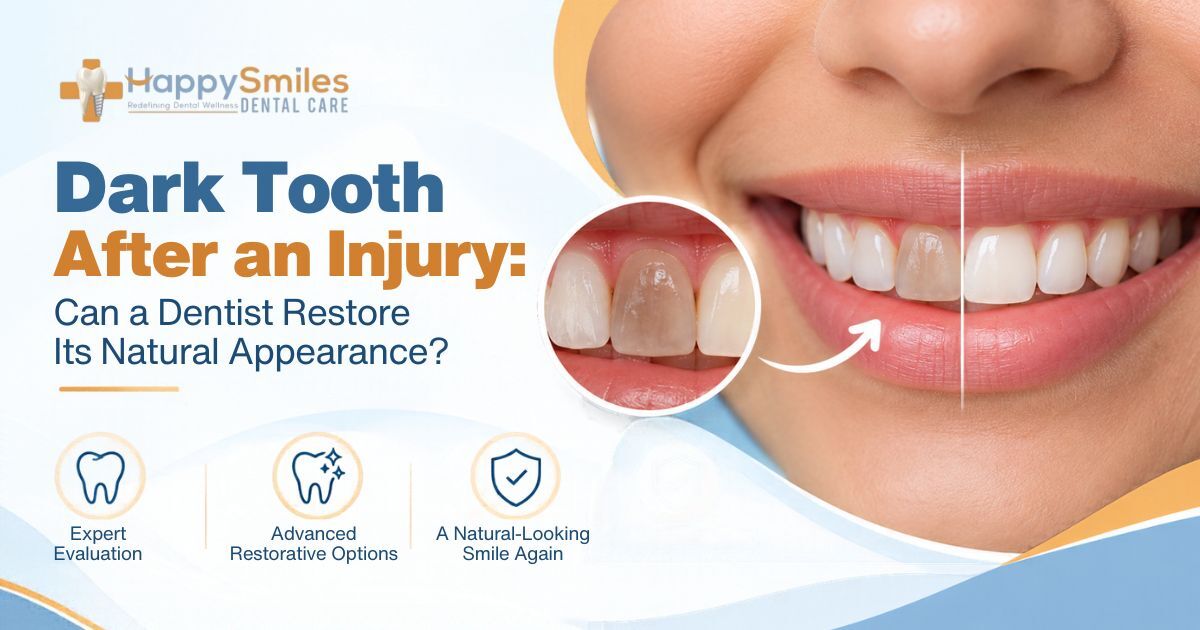
A fall from a bicycle. An elbow during a weekend cricket match. A slip on a wet bathroom floor. The tooth survives the knock, the soreness settles, and you forget about it. Then, weeks or even months later, you notice it has turned grey, brown or almost black.
Most people assume the colour is a surface stain. It isn’t. The change begins deep inside the tooth, which is why dark tooth treatment focuses on what’s happening beneath the enamel rather than on polishing the outside.
The Hidden Bruise Behind the Grey Shade
Every tooth has a living core called the pulp, made up of nerves and tiny blood vessels. A hard blow can rupture those vessels. Blood seeps into the surrounding dentine, and as it breaks down, it leaves a pigment that shows through the enamel as a grey or bluish tinge.
What happens next varies. Sometimes the pulp recovers and the colour fades. In other cases the nerve slowly dies, and the tooth keeps getting darker. A third reaction produces a yellowish shade instead, as the tooth lays down extra hard tissue inside its canal.
So tooth discoloration after injury can’t be judged by colour alone. Two teeth that look identical in the mirror can need completely different care
Why Whitening Strips Only Make It Worse
Shop-bought whitening products work on stains sitting on or just under the enamel. The pigment from a bruised or dying pulp sits deeper, within the dentine. Bleach the outside and the neighbouring teeth get brighter while the injured one stays dark, so the contrast becomes more obvious.
There’s a healthy reason not to wait, too. A dead pulp can become infected without much pain. Some people only find out when a swelling or a pimple-like bump appears on the gum.
Dark Tooth Treatment: From Diagnosis to a Natural Shade
Effective tooth discoloration treatment starts with a diagnosis, not a whitening gel. The dentist checks how the tooth responds to cold and to gentle electrical testing, then takes an X-ray to look at the root and the bone around it. The results decide the route.
If the nerve is still alive
The usual advice is to watch and wait. The tooth is reviewed at set intervals, because the tint from a bruise sometimes fades without any treatment.
If the nerve has died
A root canal comes first. The dead pulp is removed, the canals are cleaned and sealed, and the darkening stops. Internal bleaching then lightens the tooth from the inside, using a whitening agent placed within the tooth and refreshed over a few visits until the shade blends in.
If bleaching isn’t enough
When the stain resists, or the tooth is heavily filled or cracked, a tooth-coloured crown matched to the neighbouring teeth restores both strength and appearance.
Your Smile Shouldn't Carry the Scar of an Old Knock
If you’re looking for a dentist in Davangere to examine a tooth that changed colour after an accident, go early. An early visit keeps more options open, and it’s worth bringing any details you remember about the injury, even if it happened years ago.
Happy Smiles handles traumatic dental injuries, root canal therapy and internal bleaching through its endodontics department, with crowns and smile corrections available under cosmetic dentistry. Having diagnosis and restoration in one Vidyanagar clinic means fewer referrals and a single plan from start to finish.
Book a consultation with Dr. Sudhir K.M and find out which dark tooth treatment suits your tooth.
FAQs
Can a dark tooth return to its normal colour on its own?
Sometimes, yes. If the pulp was only bruised and recovers, the grey tint can fade over a few weeks or months. If the colour deepens instead, the nerve is probably dying, and the tooth needs a proper assessment.
Does a dark tooth always need a root canal?
No. A root canal is only needed when tests show the pulp has died or become infected. A tooth that still responds normally is usually monitored, because some injured teeth regain their natural colour without any treatment at all.
Is internal bleaching safe for the tooth?
It’s a well-established procedure when carried out after a properly sealed root canal. The dentist places a protective barrier over the root filling first, so the whitening agent stays in the crown of the tooth, exactly where the stain sits.
How long does dark tooth treatment take?
It depends on the cause. Monitoring a bruised tooth can stretch over several months. A root canal followed by internal bleaching usually takes a few visits over some weeks, while a crown typically needs two appointments.
Can a child's milk tooth turn dark after a fall?
Yes, and it’s common in toddlers learning to walk. Many darkened milk teeth only need monitoring. Swelling, pain or a gum boil, however, means the tooth should be seen promptly, as infection can affect the adult tooth forming underneath.