
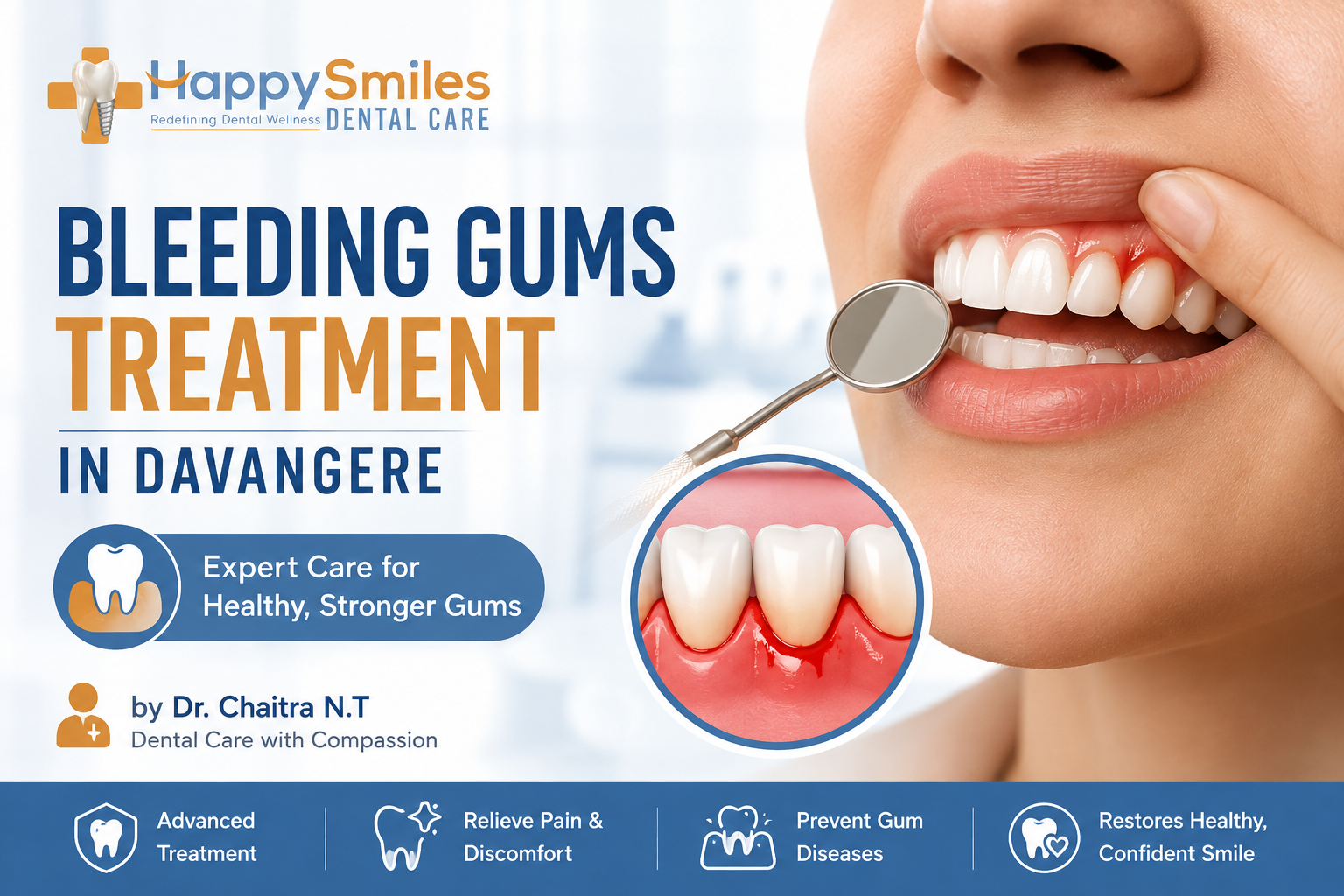
Bleeding gums can be easy to dismiss, especially when they only bleed occasionally while brushing or flossing. However, healthy gums generally should not bleed regularly. Persistent bleeding may be linked to plaque build-up, gingivitis, gum disease, or other factors that need professional evaluation. Seeking Bleeding gums treatment in Davangere can help identify the underlying cause rather than simply managing the visible symptom.
How Can Bleeding Gums Be Treated Effectively in Davangere?
Bleeding gums are usually treated by addressing the underlying cause. Depending on the condition, treatment may include professional cleaning, improved oral hygiene, management of gum inflammation, or more advanced periodontal care. Early assessment can prevent mild gum problems from progressing and help restore healthier gums.
What Causes Gums to Bleed?
Plaque is one of the most common causes of bleeding gums. When plaque accumulates around the gumline, it can irritate the surrounding tissues and cause inflammation. This early stage of gum disease is commonly known as gingivitis.
Other factors can also contribute to gum bleeding, including brushing too aggressively, inadequate flossing, certain medications, hormonal changes, smoking, and some systemic health conditions. Because the causes can vary, recurring bleeding should not be treated as a normal part of brushing.
A dental examination helps determine whether the problem is limited to gum inflammation or requires further investigation.
Why Early Gum Care Matters
Gingivitis can often be managed effectively when identified early. However, if inflammation continues, it can progress to periodontitis, a more serious form of gum disease that can affect the tissues and bone supporting the teeth.
Warning signs may include persistent bleeding, swollen or tender gums, bad breath, gum recession, sensitivity, or loose teeth. Early professional care can help control inflammation and reduce the risk of long-term damage.
This is why timely gum bleeding treatment in Davangere can be important for people experiencing repeated or unexplained bleeding.
What Happens During a Gum Examination?
A dentist will generally assess the appearance and condition of your gums, check for plaque and tartar, and examine the tissues surrounding your teeth. Depending on the findings, they may also measure periodontal pockets or recommend dental X-rays when clinically appropriate.
The goal is not simply to stop the bleeding. It is to understand why it is happening and determine the most suitable treatment. Your dentist can then explain the condition and recommend appropriate next steps based on your individual oral health.
Professional Cleaning Can Help Control Plaque and Inflammation
When plaque hardens into tartar, regular brushing and flossing cannot remove it effectively. Professional dental cleaning can remove deposits from the teeth and gumline, helping reduce the factors that contribute to inflammation.
Your dentist may also recommend improvements to your daily oral hygiene routine, such as using an appropriate toothbrush, cleaning between the teeth, and maintaining regular dental visits. Consistent home care is an important part of keeping gums healthy after professional treatment.
When Does Bleeding Require More Advanced Gum Care?
Not every case of bleeding gums indicates advanced periodontal disease. However, persistent inflammation, deep periodontal pockets, gum recession, or bone loss may require more comprehensive management.
Appropriate gum disease treatment in Davangere depends on the severity and progression of the condition. Treatment may involve professional periodontal cleaning and, where necessary, more specialised procedures. The earlier gum disease is assessed, the easier it may be to manage before significant supporting tissues are affected.
When Should You See a Dentist for Bleeding Gums?
Consider booking a dental appointment if your gums bleed regularly, remain swollen or tender, or continue to bleed despite improving your brushing and flossing habits. Persistent bad breath, gum recession, loose teeth, or changes in how your teeth fit together also warrant professional evaluation.
It is particularly important not to ignore symptoms simply because they are painless. Gum disease can progress without causing significant discomfort, so regular dental examinations can help detect problems before they become more difficult to manage.
Take the First Step Towards Healthier Gums
Bleeding during brushing or flossing should not simply be accepted as normal. Identifying the cause early can help protect your gums, teeth, and supporting structures while reducing the risk of more serious periodontal problems. If you are looking for bleeding gums treatment in Davangere, professional evaluation is the right place to start.
For personalised dental assessment and appropriate treatment planning, Happy Smiles Dental Care provides professional oral healthcare with Dr Chaitra N.T. The right treatment depends on the condition of your gums, so an individual examination is essential for deciding the most suitable approach.
Frequently Asked Questions
1. What is the best treatment for bleeding gums?
The appropriate Bleeding gums treatment in Davangere depends on the underlying cause. Treatment may involve professional cleaning, improved brushing and interdental cleaning, or periodontal care when gum disease is present. A dentist should assess persistent bleeding rather than relying on home remedies or simply changing toothpaste.
2. Is bleeding from gums a sign of gum disease?
Bleeding gums can be an early sign of gingivitis, which may develop into periodontitis if left unmanaged. However, bleeding can have other causes too. Gum bleeding treatment in Davangere should therefore begin with a dental examination to identify the specific reason and determine appropriate care.
3. Can professional cleaning stop bleeding gums?
Professional cleaning can help when plaque and tartar are contributing to gum inflammation. Removing these deposits and improving daily oral hygiene may reduce bleeding. However, persistent symptoms can require additional treatment. Your dentist can determine whether routine cleaning is sufficient or whether periodontal care is needed.
4. When should I seek gum disease treatment?
Consider gum disease treatment in Davangere if bleeding persists, gums are swollen or tender, you experience persistent bad breath, or gums begin receding. Loose teeth or changes around the gumline also warrant prompt evaluation. Early assessment can help identify periodontal problems before they progress further.
5. Can bleeding gums be prevented?
Good oral hygiene can reduce the risk of gum inflammation. Brush twice daily with fluoride toothpaste, clean between your teeth regularly, avoid tobacco, and attend routine dental examinations. If bleeding continues despite these habits, professional assessment is important because an underlying condition may require specific treatment.