
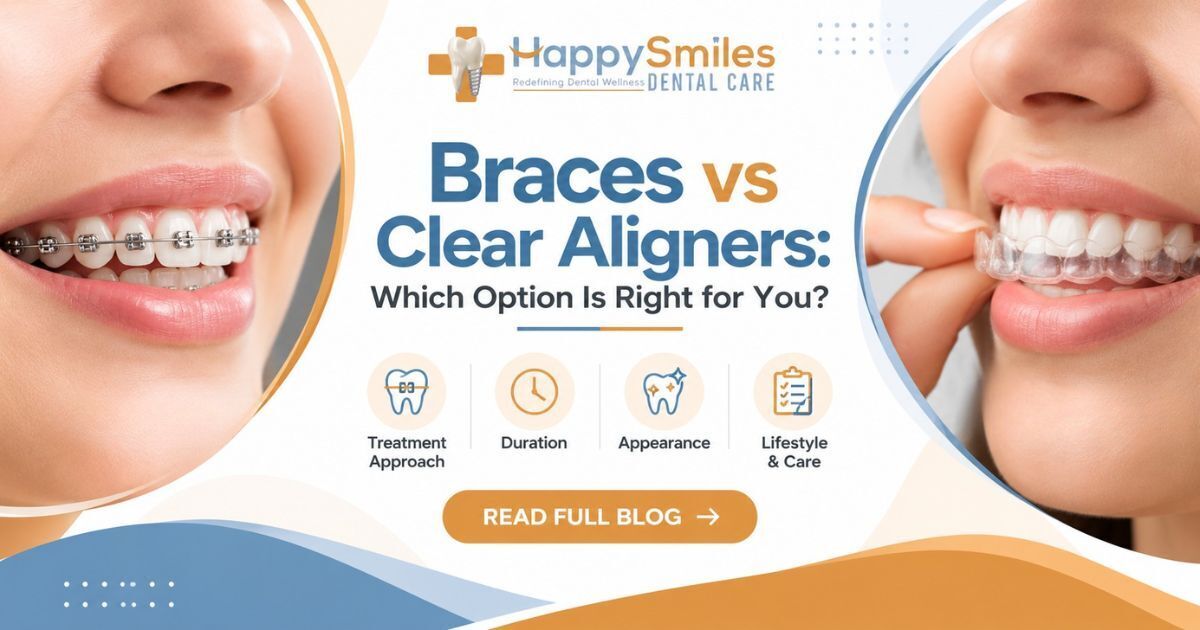
Most people who want straighter teeth arrive with the question already framed. Metal or invisible? It’s a fair place to start, but it skips the part that actually decides your result: how much your teeth need to move, and how you live from one day to the next.
At Happy Smiles, this is one of the questions we hear most from teenagers, parents and working adults. So rather than declare a winner, this guide from your dentist in Vidyanagar Davangere walks through how each option works and where each one earns its place.
The Real Question Isn't Metal vs Invisible
Here’s the common assumption: clear aligners are the “upgraded” version of braces, so anyone who can choose them should. That isn’t quite how it works. Both move teeth the same basic way, through gentle, steady pressure over months.
The difference lies in who controls that pressure. With braces, your dentist does. With aligners, you do, every single day.
Once you see it that way, the choice gets much clearer. Any good dentist in Vidyanagar Davangere will start by examining your bite before discussing appearance at all.
Fixed Braces: The Quiet Workhorse
Braces use small brackets bonded to each tooth, linked by a wire that your dentist adjusts at regular visits. They stay on around the clock. That’s their biggest strength, because the teeth keep moving whether you remember them or not.
They also handle difficult movements well. Badly rotated teeth, significant crowding and bite problems where the upper and lower jaws don’t meet properly are all territory where braces shine.
The trade-offs are practical ones. You’ll need to avoid hard and sticky foods, and brushing around brackets takes extra time. Tooth-coloured ceramic brackets make them less noticeable, though not invisible.
For parents considering braces in Davangere for a child, that built-in reliability matters. A teenager doesn’t have to remember anything for the treatment to keep working.
Clear Aligners: Freedom That Comes With Homework
Aligners are a series of custom-made, transparent trays. Each set shifts your teeth slightly, and you move to the next set on a schedule your dentist gives you. They come out for meals, so there are no food rules, and you brush and floss as normal.
But there’s a catch. Aligners only work while they’re in your mouth, and most treatment plans ask you to wear them for 20 to 22 hours a day. Leave them on the bedside table for a weekend and your progress stalls.
Choosing clear aligners in Davangere makes the most sense if your case is mild to moderate and you trust yourself to stay consistent. Think of a professional who meets clients all day, or someone with a wedding on the calendar
Three Questions That Settle It
How complex is the movement?
Spacing and mild crowding suit aligners well. Severe rotations or major bite correction point towards braces.
How disciplined will you be, honestly?
If you know you’ll forget trays after lunch, braces remove that risk entirely. There’s no shame in choosing the option that matches your habits.
What does your daily life look like?
Diet, sport, travel and how often you can attend check-ups all matter. Whether you’re seeing a general dentist or an orthodontist in Davangere, ask for a written plan that covers duration, review visits and retainers.
That last word deserves attention. Teeth tend to drift back after treatment with either option, so a retainer is part of the deal, not an optional extra.
Your Straighter Smile Starts With a Dentist in Vidyanagar Davangere
Neither option is better in every case. The right one is the one that fits your teeth, your routine and your goals, and an honest examination tells you which that is.
If you’d like a clear answer for your own smile, book a consultation with Dr. Sudhir K.M at Happy Smiles, your trusted dentist in Vidyanagar Davangere. We’ll check your bite, talk through both options plainly and help you choose with confidence.
FAQs
Are clear aligners as effective as braces?
For mild to moderate crowding and spacing, aligners give excellent results when worn as instructed. Braces still handle complex rotations and bite problems more predictably, so the right choice depends on exactly what your teeth need to do, and how.
Which treatment is faster?
Neither is automatically quicker. Treatment time depends on how far your teeth need to move and how well you follow your plan. Missing aligner wear or skipping brace adjustments will lengthen treatment noticeably, whichever of the two options you choose.
Do braces or aligners hurt?
Both cause mild pressure and soreness for a few days after an adjustment or a new aligner set. This is completely normal and settles quickly for most patients. Soft foods and over-the-counter pain relief help during those first few days.
Will I need a retainer after treatment?
Yes, always. Teeth naturally try to drift back towards their old positions once treatment ends. Wearing a retainer as your dentist advises protects the result you’ve invested in, whether you finished treatment with fixed braces or with clear aligners.
Am I too old for braces or aligners?
No. Healthy teeth can be moved at any age, and many adults straighten their smiles successfully. Your dentist will first check your gum and bone health, because a stable foundation matters far more than the number on your birth certificate.