
That Gap Is Doing More Than You Think
Most people put off replacing a missing tooth for one simple reason. It doesn’t hurt. You chew on the other side, smile a little more carefully, and life carries on.
But the space keeps changing your mouth long after the tooth has gone. If you’re weighing up the dental implants in Davangere clinics, this guide covers when an implant makes sense, who it suits and what treatment involves.
Why a Missing Tooth Rarely Stays a Small Problem
A tooth root does quiet work. Each time you bite, it sends pressure into the jawbone, and that stimulation keeps the bone healthy. Once the root is gone, the bone in that area starts to shrink.
Anyone searching for dental implants tends to start with cost. Timing deserves the first question, because less bone can mean a graft before an implant goes in.
Neighbouring teeth react too. They tilt into the space, and the opposing tooth drifts towards it. Your bite shifts and food traps more easily. None of this happens overnight, which is exactly why it gets ignored.
Dental Implants Davangere: Signs the Timing Is Right
These are good reasons to book an assessment:
- A tooth has recently been lost or advised for extraction
- You avoid chewing on one side
- Nearby teeth have started to look crooked
- Your denture slips, rubs or makes eating uncomfortable
- An old bridge has failed
- You feel self-conscious smiling or speaking
If any of these sound familiar, an examination will show whether an implant suits you now or needs some groundwork first.
Who Suits an Implant, and Who Needs a Step First
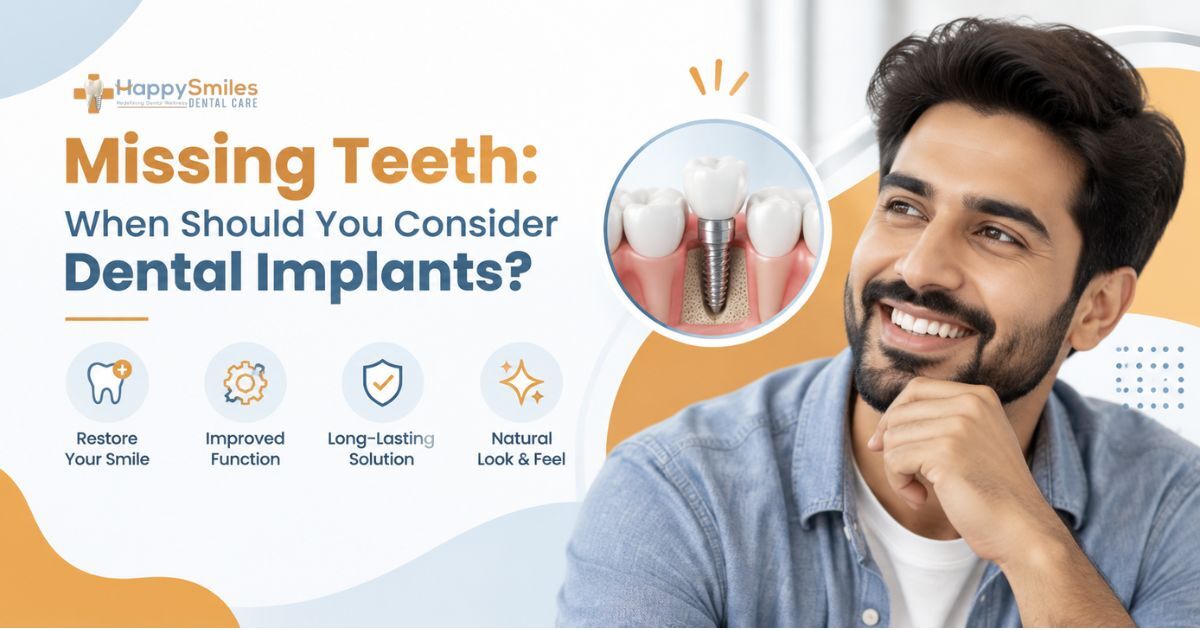
An implant is a small titanium post placed in the jawbone. Over a few months, the bone bonds to it, and a crown is fitted on top. For that to work, you need:
- Enough bone to hold the post, or a plan to rebuild it
- Healthy gums, free from active infection
- General health that supports healing
- A fully developed jaw
Smoking slows healing and raises the risk of problems around the implant. Uncontrolled diabetes does the same. Neither rules you out automatically, but both need an honest conversation first.
Many people considering dental implants in Davangere assume age is the barrier. It rarely is. Bone and gum health matter far more.
Bridge, Denture or Implant: Picking the Right Fix
Options for tooth replacement in Davangere fall into three groups. A bridge anchors a false tooth to the teeth either side, which means trimming those teeth down. A removable denture is quicker but doesn’t stop bone loss beneath it. An implant replaces the root as well as the crown, so it stands alone and keeps the bone working.
That doesn’t make implants right for everyone. The best dental implants in Davangere are the ones placed in the right mouth after careful planning. Sometimes a bridge is the more sensible choice, and a good dentist will say so
How Treatment Unfolds at Happy Smiles
Every plan for dental implant treatment in Davangere patients receive at Happy Smiles starts with a thorough examination. Dr. Sudhir K.M checks your gums, bite and remaining teeth, while imaging shows how much bone is available. You then get a clear sequence: placement, healing, and fitting of the final crown.
Choosing a dental implant clinic in Davangere close to home helps more than people expect. Treatment spans several visits over a few months. An implant can’t decay, but the gum around it still needs brushing, flossing and regular reviews.
Don't Let the Gap Make the Decision
A missing tooth feels like something to deal with later. The bone and teeth around it don’t wait.
If you’d like to know whether the dental implants in Davangere patients rely on are right for you, book a consultation with Happy Smiles. You’ll leave with a clear, honest plan.
Frequently Asked Questions
How long do dental implants last?
With good home care and regular check-ups, an implant can last for many years, often decades. The crown on top might eventually need replacing after years of normal wear. Brushing, flossing and attending reviews protect the gum and bone holding the implant.
Is getting a dental implant painful?
Placement is done under local anaesthetic, so you shouldn’t feel pain during the procedure. Some tenderness and swelling for a few days afterwards is normal, and most people manage it with simple painkillers, cold compresses and soft food.
How long does the whole implant process take?
It depends on your bone and gum health. The post needs a few months to bond with the jaw before the final crown is fitted. If a bone graft is needed first, the overall timeline extends by several more months.
Can I get an implant years after losing a tooth?
Often, yes. The main question is how much bone remains. If it has shrunk, a graft can rebuild the area before placement. An examination and imaging at Happy Smiles will show exactly what’s possible in your case.
Can implants replace several missing teeth?
Yes. Two or more implants can support a bridge, and a small number of implants can hold a full arch of teeth. After an examination, your dentist will recommend the approach that best suits your bone, bite and budget.